How to prevent musculoskeletal injuries (MSIs)
Will wearing a back belt or wrist brace prevent musculoskeletal injuries (MSIs) at work? While they may aid in recovery or be helpful in clinical settings, research on both back belts and wrist braces shows inconclusive or inconsistent results regarding injury prevention.
In fact, there is evidence that wearable supports may create a false sense of protection, leading some workers to cause more strain to their muscles by taking on heavier loads, working too fast, or sustaining postures longer than they otherwise would. Long-term reliance on wearable supports may also affect muscle conditioning or shift strain to other areas of the body.
Where reductions in injury rates have been successful, they are typically associated with:
- Redesign of tasks or workstations
- Mechanical aids or adjustable equipment (e.g. lift tables)
- Workload management (i.e., job rotation)
- Worker education and early reporting systems
Prevention strategies that eliminate or reduce hazards by following the hierarchy of controls provide the greatest and most effective protection for workers.
The hierarchy of controls
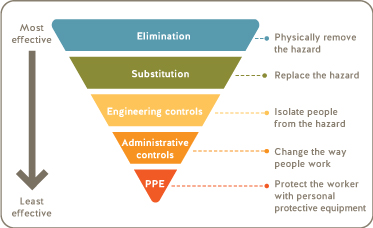
If you cannot eliminate a risk, you’ll need to implement control measures to minimize the risk.
When considering how to reduce the risk, there's a certain order you should follow. This is called the hierarchy of controls. It's important to follow the hierarchy, rather than start with the easiest control measures.
Note that while the controls are listed in order of effectiveness, all five types of controls should be considered by following the hierarchy.
Often this involves considering a combination of controls. For example, engineering controls are physical modifications to the work environment, equipment, and processes to reduce the risk of MSIs. They can include mechanical lifting aids — such as carts, hoists, pallet jacks, or conveyors — and adjustments to the work environment that limit the distance heavy objects need to be lifted or carried, such as rearranging shelving to be at knee-to-waist height or redistributing loads across smaller units. Controls can also involve modifications to equipment or workspaces to limit awkward postures, twisting, and stooping.
Administrative measures also help minimize the risks of MSIs. These can include rotating staff through a series of tasks, using different muscle groups to reduce strain, along with proper training on each task.
Read more
To learn more about workplace controls, risk assessments, and the role of braces, check out the other articles in this series:
For more information on workplace risk, check out the Controlling risks web page on worksafebc.com.
To learn more about health and safety associations (HSAs) that develop industry-specific resources focused on preventing occupational injury and disease, visit the Health and safety associations page on worksafebc.com.
We're here to help
If you have questions about ergonomics or human factors, or need help managing the risk of MSI in your workplace, please contact us at HumanFactors@worksafebc.com
|